
Expected goals describes pre-shot chance quality; expected goals on target adds information about the on-target execution. They answer different questions.
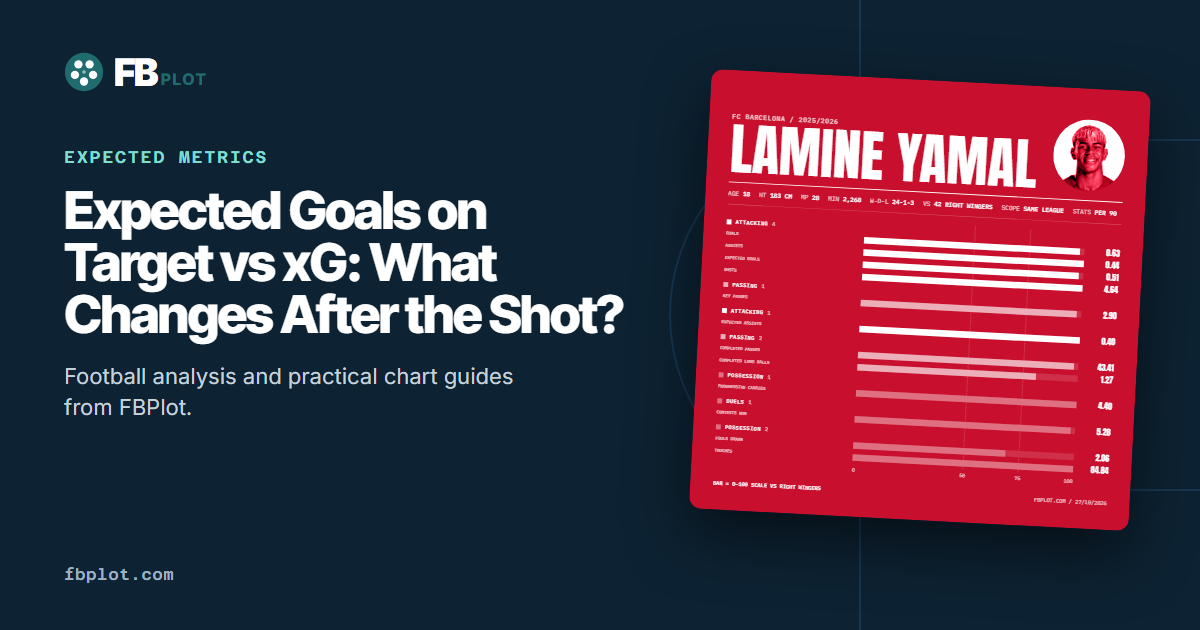
Learn how to compare xG and xGOT without treating either model as a final verdict on finishing or goalkeeping.
Two shots can begin from nearly the same place and end very differently. One flies towards the top corner; the other reaches the goalkeeper at chest height. A pre-shot model sees similar opportunities. A post-shot model can distinguish the execution.
That is the practical difference between expected goals (xG) and expected goals on target (xGOT). They are related measures placed at different moments in the shooting sequence.
xG Starts Before the Shot's Outcome
Stats Perform's xG explainer describes expected goals as an estimate of the probability that a chance is scored, based on information about comparable historical shots. Model inputs and values vary by provider, so xG should always retain its source.
The key point is temporal: xG evaluates the opportunity using information available before or at contact. It helps answer, “What quality of chances did the player or team reach?”
It does not need the shot to be on target. A miss and a goal can begin with the same xG if the pre-shot situation is modelled identically.
xGOT Adds On-Target Execution
Stats Perform's xGOT documentation describes a model applied to on-target shots that combines the underlying chance quality with where the ball is heading in the goalmouth. A shot towards a difficult corner can receive more post-shot value than one directed centrally.
That makes xGOT useful for a second question: “What did the shooter do with the chances that reached the target?” It can also help describe the quality of shots a goalkeeper faced.
Blocked, missed and provider-specific edge cases matter. Do not assume a post-shot total covers the same attempt set as xG.
The Gap Is a Prompt, Not a Label
When xGOT exceeds xG over a sample, on-target execution improved the assessed danger of those chances under the model. When it falls below xG, the on-target placement was less threatening relative to the openings.
It is tempting to rename the gap “finishing ability.” That is too strong. The sample may be small, blocked and off-target attempts sit outside the same comparison, and goalkeeper interaction still influences outcomes. Repeated evidence over larger samples is more persuasive than one short run.
The goals minus expected goals guide addresses a related but different gap: realised goals versus pre-shot expectation.
A Forward Profile Needs All Three Layers
The FBPlot forward pizza below keeps goals and expected metrics inside a broader attacking profile.
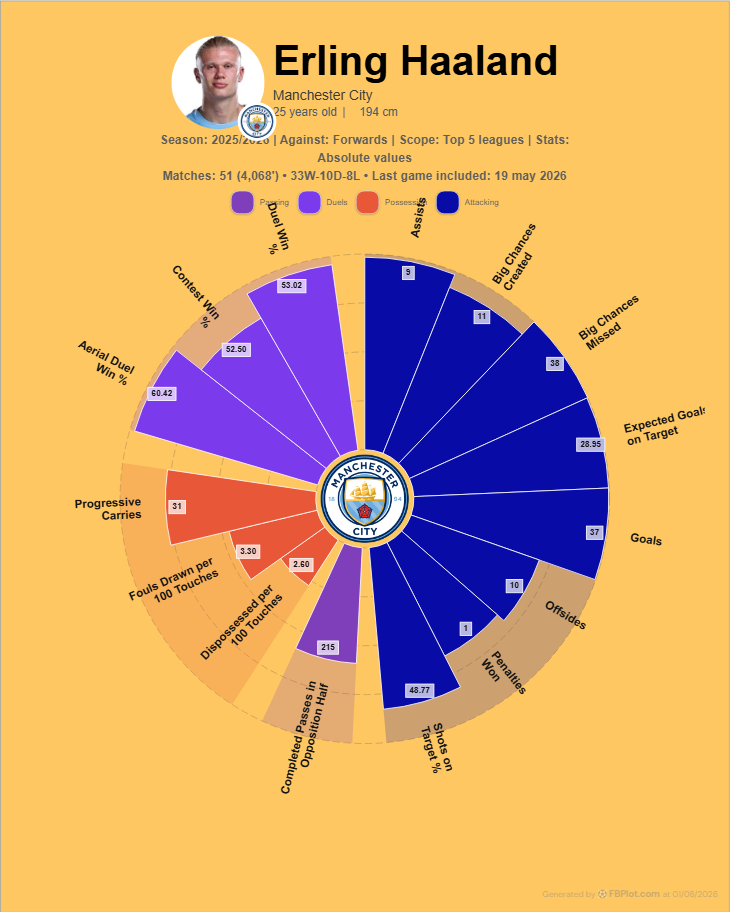
Read a shooting profile in order:
- shots and xG for volume and pre-shot opportunity;
- shots on target and xGOT for execution among the relevant attempts;
- goals for realised outcome;
- minutes, role and competition scope for exposure.
Each layer can disagree. The disagreement is often the most interesting part of the analysis.
The Goalkeeper View Reverses the Question
For a goalkeeper, raw saves reward both shot-stopping and being forced to face attempts. xGOT faced can add context about how difficult the on-target attempts were under the model. Goals prevented then compares that expected post-shot danger with goals conceded, subject to the provider's formula.
Even here, do not erase the defence. Starting position, screens, rebounds, crosses and the team's shot suppression shape the keeper's workload. The goalkeeper-statistics guide combines prevention with claims, sweeping and distribution rather than crowning a player from one number.
Never Mix Providers Silently
An xG value from one model and an xGOT value from another may use different training data, variables and attempt definitions. Subtracting them can create a precise-looking number with no coherent methodology.
Use both measures from the same provider and scope whenever possible. Record whether penalties, own goals and blocked attempts are included. If the methodology is unclear, describe the observed totals without pretending the gap is standardised.
A Sentence Worth Publishing
A careful interpretation might read:
The player's on-target execution increased the assessed danger of his chances in this period, with xGOT above pre-shot xG. The gap is descriptive rather than a stable finishing grade and should be checked over a larger, consistently defined sample.
That sentence captures what changed after the shot while preserving uncertainty.
Use the Expected Goals metric page and Expected Goals on Target page to keep the measures separate, then place them beside shots, on-target attempts and goals in a bar design of the FBPlot Profile editor.
Found this helpful? Share it with your network
More Articles
Big Chances Created vs Key Passes: Two Views of Chance Creation
Key passes count final passes before non-scored shots under one provider convention; big chances created isolate a narrower high-quality subset.
Duels Won in Football: Meaning, Context and Common Mistakes
Duels won record successful contests, but totals and win percentage need role, opportunity, duel type, location and team context before ranking players.